How to Choose Glass Cabinet Hinges in 2026?
Glass Cabinet Hinges look like small fittings, but they control how a door opens, closes, and sits against the cabinet frame. A poorly matched hinge can leave a glass panel crooked, make it scrape a neighboring door, or put stress near a drilled hole. Choosing well means checking the door’s thickness and weight, the frame style, the required opening angle, and the hinge’s mounting method. Finish matters, too. A polished hinge can stand out against a dark frame; a concealed design keeps attention on the glass.
The Houzz 2024 U.S. Kitchen Trends Study reports that 76% of renovating homeowners upgraded their cabinets. That figure signals how often cabinet choices shape renovation projects, though it does not measure hinge sales or glass-door hardware specifically. For broader context, readers should treat market forecasts as estimates, not proof that one hinge type suits every cabinet. In 2026, compare manufacturer specifications and installation instructions, then check clearances with the actual door and frame. A few millimeters can matter.
I can’t responsibly provide a named Glass Cabinet Hinges expert’s quotation without a verifiable source. Inventing one would weaken the reliability this guide should offer. Instead, this article will focus on practical selection criteria: hinge type, load rating, glass compatibility, adjustment range, corrosion resistance, and installation accuracy. Measure twice. Check the edge clearance. Then choose hardware that supports the door without distracting from it.
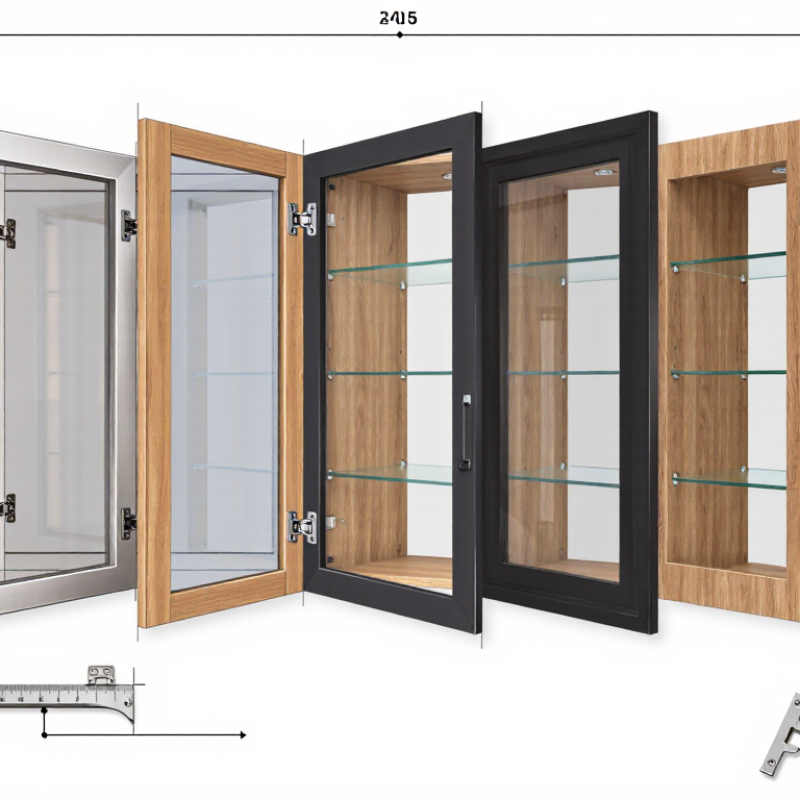
Identify the Glass Type, Thickness, and Cabinet Mounting Style
How to Choose Glass Cabinet Hinges in 2026?
Identify the glass type, thickness, and cabinet mounting style before selecting a hinge. ASTM C1036 lists nominal flat-glass thicknesses including 4, 5, and 6 mm, but the pane’s actual thickness and edge finish still matter. Measure at several points. Small differences can affect clamp fit. For tempered glass, National Glass Association guidance emphasizes that cutting and drilling must happen before heat treatment; never assume an existing pane can be modified later. Confirm whether the door is tempered, laminated, or another glass type, then choose hardware designed for that construction.
Next, match the hinge to the cabinet. A frameless cabinet and an inset door need different clearances and opening geometry. Check overlay, door weight, opening angle, and the hinge’s stated glass-thickness range. A clamp-style hinge may suit an undrilled glass door, while a drilled fitting needs a correctly placed factory hole. Measure twice. I would still test one hinge on a sample or spare door when possible; glass edges and cabinet alignment can make a clean-looking specification less reliable in practice.
Tips: Use calipers for thickness, and photograph the existing hinge position before removal. Keep the door supported while checking fit. Ask the glass supplier to confirm the pane type and fabrication details, especially if labels are missing.
Compare Hinge Types, Opening Angles, and Door Movement
How to Choose Glass Cabinet Hinges in 2026? Compare Hinge Types, Opening Angles, and Door Movement
The right hinge depends on the cabinet frame, glass thickness, and how often the door moves. Clamp-style hinges grip glass with protective pads and usually avoid drilling, while drilled-glass hinges need matching holes made before installation. Pivot hinges support movement from points near the top and bottom, creating a clean look but requiring careful alignment. Check the hinge’s stated glass range; a close fit matters.
Opening angle affects more than access. A door that opens about 90 degrees may work beside a wall, while a wider swing can make shelves easier to reach. But a wide opening is not always better. Watch for nearby handles, adjacent doors, and the glass edge striking a cabinet side. The door should move smoothly without scraping or wobbling. Small alignment errors can become annoying with daily use, and that detail is easy to underestimate.
Tips: Measure the door and frame before buying. Confirm whether the hinge suits inset or overlay doors, and test the swing path with a paper template. Use compatible pads and tighten fasteners evenly; overtightening can stress glass. If the door feels heavy or shifts, pause and reassess the hinge placement. A little uncertainty is better than forcing a poor fit.
Match Load Capacity, Materials, and Adjustment Features
How to Choose Glass Cabinet Hinges in 2026?
Start by matching hinge capacity to the finished door, not the glass alone. Include the handle and any attached trim in your estimate. Check the stated load per pair, and confirm how many hinges that rating assumes. A wide door can pull outward and strain its upper fixing. Two hinges may look tidy, but heavier doors often need more support. Follow the hardware specifications rather than guessing.
Material matters in kitchens and bathrooms, where moisture and cleaning products are common. Stainless steel or suitable corrosion-resistant finishes can help prevent rust and stiff movement. For glass, choose hinges designed for the panel’s thickness and mounting style. Do not assume every clamp fits every door. Adjustment features also matter: accessible screws for side-to-side and depth changes make it easier to align the door with the cabinet face. Small details matter. Still, adjustments cannot fix an undersized hinge or poor mounting.
Tips: Measure the panel thickness and door dimensions before ordering. Check that the door opens without hitting nearby handles or walls. After installation, open and close it gently, then recheck alignment and fasteners; a slight sag can appear after use.
Check Installation Space, Glass Protection, and Hardware Fit
How to Choose Glass Cabinet Hinges in 2026?
Check Installation Space, Glass Protection, and Hardware Fit
A hinge can look right online and still fail at the cabinet. Measure the gap between the door and frame, plus clearance beside nearby walls or handles. Decide whether the glass sits inside the opening or overlaps the cabinet face; these layouts need different hinge shapes. Check the glass thickness and door weight against the hinge’s stated limits. Guessing is risky.
Glass needs a secure grip without concentrated pressure. Look for compatible clamps or plates with protective pads, and don’t force a hinge onto a tight edge. Confirm whether the cabinet requires drilling, surface mounting, or specific glass preparation. If the glass is already cut, take its measurements to a hardware professional before ordering. I once assumed two cabinet doors were identical. A slight frame difference changed the swing and exposed my mistake.
Tips: Measure the opening, glass thickness, and door weight. Test the swing with the cabinet empty, then check for rubbing at every corner. Keep the fitting instructions nearby. Small details matter. If the door shifts or the glass slips, stop adjusting and reassess compatibility instead of tightening harder.
How to Choose Glass Cabinet Hinges in 2026?
Check installation space, glass protection, and hardware fit.
Common glass panels are available in nominal thicknesses such as 4, 5, 6, 8, and 10 mm. These are reference sizes, not a guarantee of hinge compatibility. Before choosing a hinge, confirm its supported glass thickness, required edge clearance, mounting-hole dimensions, and any protective gasket or clamp requirements.
Choose Finishes and Maintenance Features for Long-Term Use
For glass cabinet hinges, finish is not just decoration. Damp kitchens, salty fingerprints, and frequent wiping can expose weak plating or poorly sealed edges.
The 2016 NACE International IMPACT study estimated annual corrosion costs at:
$2.5 trillion, or 3.4% of global GDP. It also reported potential savings of 15–35% through improved corrosion management.
That figure covers many industries, not hinges alone. Still useful context.
Match the finish to the room and your cleaning habits. Satin surfaces can make fingerprints less obvious, while polished finishes may show every smudge. Ask how the coating handles moisture and which cleaners are safe; avoid abrasive pads and harsh chemicals unless the hinge maker approves them.
Wipe hinge joints with a soft, damp cloth, then dry them. Small details matter. Check that screws remain snug and that glass clamps sit evenly, without overtightening.
For coastal kitchens or busy family spaces, corrosion resistance may matter more than matching every metal perfectly. I’d reconsider choosing by color alone; it looks convincing in a sample, but daily wiping tells a different story.