
skip to content
Morepages
Toggle more

Head Office


Tayco Office Furnishings Inc.
400 Norris Glen Rd.
Toronto, ON M9C 1H5
T: (416) 252-8000
T: (800) 675-4092
F: (416) 252-4467
[email protected]

Best Private Label Lipstick Manufacturers in China?

Choosing a Private Label lipstick manufacturer in China is not simply a search for the lowest unit price. A lipstick may look elegant in a sample tube, yet feel dry after an hour or arrive in packaging that does not match the approved shade. Small details matter. Buyers should examine formula options, color consistency, filling quality, packaging choices, communication, and sample revisions before committing to production.

Cosmetic chemist Perry Romanowski is known for emphasizing formulation and product performance. A practical paraphrase of that guidance is: “A product’s performance matters more than its marketing claims.” That principle is useful when comparing manufacturers. Ask how the supplier evaluates texture, payoff, wear, and batch consistency, and request clear answers rather than polished promises. A sample is a starting point, not proof of reliable large-scale production.

This guide looks at Chinese manufacturers through those practical questions. It considers customization, minimum order quantities, lead times, quality controls, and the support available during development. The best partner may not offer every option. That can be frustrating. A supplier with transparent limits and steady communication may be a safer fit than one promising everything. Brand owners should also verify current product specifications and documentation directly with each manufacturer before placing an order.
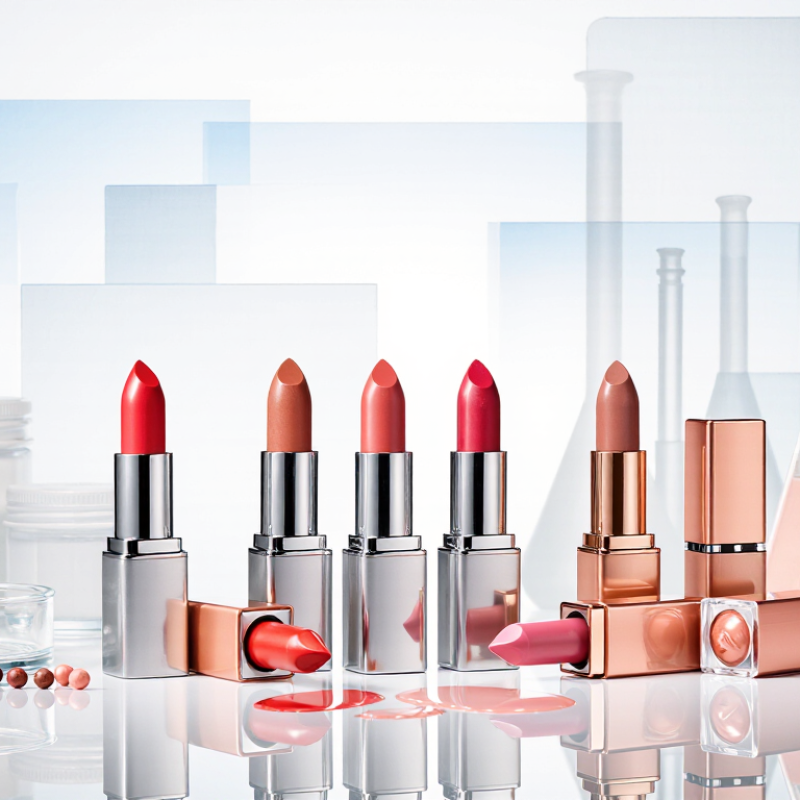
Best Private Label Lipstick Manufacturers in China?

What Private Label Lipstick Manufacturing in China Includes

Private label lipstick manufacturing in China can cover more than filling color into tubes. A project may begin with a brief describing finish, wear feel, target shades, and price range. The manufacturer may offer existing base formulas or develop a custom one, depending on equipment and order volume. Ask what “custom” means in writing.

Sampling is hands-on. A lab sample lets you assess color payoff, glide, scent, and feel after several hours. Shade cards and digital images help, but they cannot show how a red looks under store lighting. Tiny differences matter. Request an approved reference sample, then confirm whether the bulk formula, pigment load, and packaging will match it. A sample is not a guarantee.

Production services can include pigment dispersion, molding, cooling, trimming, tube assembly, labeling, and carton packing. Quality checks may examine weight, appearance, cap fit, and batch consistency. Ask for inspection stages and defect criteria, not just a general quality promise. Packaging choices can affect cost and lead time. Confirm minimum order quantities, sample charges, production schedules, and available product documents. Details are easy to miss. A clear specification sheet helps, though it may not prevent every surprise.


How to Evaluate Chinese Lipstick Manufacturers

How to Evaluate Chinese Lipstick Manufacturers

A manufacturer’s website can show attractive equipment, but it cannot prove consistent product quality. Request a current factory profile, production flow, and examples of batch records. Ask who handles formulation, shade matching, and quality checks. Specific answers matter. Compare them with a small pilot order, not only a polished presentation.

Test lipstick samples under consistent conditions. Check color payoff, scent, drag, breakage, and how the product looks after several hours. Try each shade on different skin tones, and inspect the lipstick after repeated twisting. Small details count. Ask whether the sample uses the same formula and packaging planned for production; otherwise, your comparison may be misleading. Confirm packaging compatibility, ingredient documentation, and how the factory tracks batches for your target markets.

Communication is part of the evaluation. Send a brief with shade references, packaging dimensions, and expected order volume, then note how clearly the team responds. Ask how it records defects and handles a batch that misses agreed specifications. Review lead times, minimum order quantities, sample fees, and change-control procedures in writing. A video call helps, though it is not an audit. If practical, arrange an independent factory inspection. I would not choose on price alone; even a careful review can miss a weak point, so keep approval samples and written specifications before production.

Leading Private Label Lipstick Manufacturers in China

Leading Private Label Lipstick Manufacturers in China

China’s leading private label lipstick manufacturers offer more than color and packaging. Strong partners can explain formula options, pigment dispersion, filling tolerances, and how a shade may shift under store lighting. Grand View Research valued the global lipstick market at USD 17.49 billion in 2023 and projected 5.9% annual growth from 2024 to 2030. This demand makes reliable product development and repeatable batches especially important.

Evaluate manufacturers through a sample-to-production process. Ask for ingredient specifications, batch records, stability-test results, and clear quality-control checkpoints. Compare the approved sample with a production run under daylight and warm indoor light; even a small undertone change can matter. Check minimum order quantities, packaging compatibility, and lead times in writing. A polished sample is reassuring, but it cannot prove that every later batch will match. That part deserves scrutiny.

Tips: Send a physical color reference, not only a screen image. Request a pilot batch before committing to larger quantities, and keep a sealed reference sample for comparison. Ask who handles testing and documentation; vague answers are a warning sign.

How to Compare Products, Services, and Minimum Order Quantities

When comparing private label lipstick manufacturers in China, start with the product, not the catalog photos. Request samples in your target finish, such as matte, satin, or balm-like, and test them after several hours of wear. Check color payoff, scent, and whether the formula feels dry around the lip line. Ask whether pigment adjustments, fragrance, and tube choices are included or priced separately. One good sample does not prove consistent bulk production.

Compare services through clear, specific questions. Can the manufacturer help match a reference shade? What checks are performed on color and filling consistency? Ask for ingredient information, sample timelines, production lead times, and packaging specifications in writing. This part is easy to overlook. A responsive sales contact is useful, but written answers make supplier comparisons more reliable.

Minimum order quantities can vary by formula, shade, and packaging component. A supplier may accept a modest order for a standard formula but require more units for custom colors or printed tubes. Request separate minimums for each shade and component, plus a breakdown of sample, setup, and unit costs. Confirm how changes affect the schedule. Smaller orders may reduce inventory risk, though they can raise the per-unit cost. Calculate both before choosing; the cheapest quote may not fit your launch plan.

Best Private Label Lipstick Manufacturers in China? — How to Compare Products, Services, and Minimum Order Quantities

Use this comparison framework to evaluate manufacturers. MOQ and lead-time figures below are indicative planning ranges, not supplier quotes; actual terms depend on formula, packaging, customization, and order volume.

Comparison Factor Stock Formula with Custom Label Custom Shade or Formula Custom Packaging What to Verify Before Ordering
Product options Existing lipstick formula and available shades; branding is usually applied to labels or outer packaging. Shade, finish, or formula is developed or adjusted to meet a product brief. Existing product may be paired with customized tubes, cartons, colors, or decoration. Ask for the current shade range, finish options, formula specifications, and physical samples.
Indicative MOQ Often lower than fully customized projects; a planning range may be approximately 500–2,000 units per SKU. Often higher because development, color matching, and production setup may be required; approximately 2,000–5,000 units per shade can be a planning estimate. Custom components may have separate MOQs from the lipstick itself; ask whether quantities apply per color, component, or order. Request a written MOQ breakdown for the formula, shade, tube, decoration, and carton. Confirm whether a mixed-shade order is permitted.
Formula and finish Common options may include matte, satin, cream, and sheer finishes, depending on the manufacturer’s catalog. May allow changes to color, payoff, texture, fragrance, or selected ingredients, subject to feasibility and testing. Packaging changes do not necessarily change the formula; clarify which elements are included in the project. Review ingredient lists, color specifications, performance samples, and the process for approving a production standard.
Sampling and approval Request a sample of the selected existing formula and shade before placing a bulk order. Allow for development rounds and written approval of the final shade and formula. Approve packaging drawings, color references, decoration, and component samples before mass production. Confirm sample fees, revision limits, sample timing, and how the approved sample will be matched in production.
Indicative production timing Planning estimate: around 4–8 weeks after artwork, samples, and order details are approved. Planning estimate: around 8–16 weeks or longer when formula development, testing, or multiple approval rounds are needed. Custom packaging can add time, especially when components require new tooling or special decoration. Ask for separate timelines for development, component sourcing, production, inspection, and shipment.
Quality and documentation Request batch records, product specifications, ingredient documentation, and applicable test reports. Confirm that the final formula and shade are documented and that relevant stability and compatibility checks are considered. Check packaging compatibility and confirm that printed claims match substantiated product information. Verify the factory’s quality procedures, traceability, testing scope, and documentation required for your destination market.
Cost drivers Unit cost depends on formula, packaging, decoration, quantity, and order terms. Development work, color matching, testing, and formula changes may add charges. Custom molds, special finishes, printing, and low-volume component orders can increase cost. Compare itemized quotations and clarify sample, tooling, testing, packaging, shipping, and payment charges.
Best suited for Brands testing demand or seeking a simpler launch with fewer product-development steps. Projects needing a distinctive shade range or specific product characteristics. Projects where shelf appearance and packaging differentiation are priorities. Choose based on budget, launch schedule, target market, customization needs, and acceptable inventory risk.

Before committing, obtain a current quotation and confirm the exact MOQ, product specifications, sample approval process, production schedule, quality documents, and shipping terms in writing.

How to Verify a Manufacturer Before Placing an Order

Choosing a private-label lipstick manufacturer in China requires more than comparing shades and unit prices. McKinsey’s 2023 beauty-market report estimated the global beauty market at about $430 billion in 2022, with potential growth to $580 billion by 2027. That scale makes supplier verification essential. A polished sample is encouraging, but it cannot prove consistent production.

Ask for the factory’s business and production-site details, then confirm that certificates match the actual site and cover relevant cosmetic manufacturing activities. ISO 22716 provides good-practice guidance for cosmetic production, quality control, storage, and shipment. Request recent audit findings, batch records, and test reports for the proposed formula. Check whether testing covers stability, microbial quality, and packaging compatibility. Request the raw data. Small details matter.

Before ordering, compare the final sample with written specifications for shade, texture, fill weight, and packaging. Ask how the manufacturer handles rejected batches, formula changes, and production delays. Where possible, arrange an independent factory audit and verify test results with the issuing laboratory. It is easy to overvalue a low quote; I would treat vague answers about traceability as a reason to pause. One limitation: a successful sample run does not guarantee every later batch will match, so define acceptance criteria and change-control steps in writing.

Article Source: