

skip to content
Morepages
Toggle more

Head Office


Tayco Office Furnishings Inc.
400 Norris Glen Rd.
Toronto, ON M9C 1H5
T: (416) 252-8000
T: (800) 675-4092
F: (416) 252-4467
[email protected]

Top Office Furniture Companies for Global Buyers?

Choosing among the top office furniture companies takes more than comparing polished product photos. Global buyers must weigh comfort, durability, price, delivery capacity, and support after installation. A chair may look sturdy online, yet its adjustment controls can feel flimsy during a full workday. The office furniture com market is broad, and no single supplier suits every workplace.

Design offers one useful lens. Charles Eames, the designer and furniture innovator, said, “The details are not the details. They make the design.” That idea matters when evaluating desk edges, drawer movement, upholstery seams, and the ease of replacing worn parts. Details matter. Still, a memorable design quote cannot prove a product’s durability. Buyers should check specifications, warranty terms, and independent product information before making large commitments.

This guide compares companies through practical questions: What furniture do they offer? Can they support projects across regions? How clear are their product specifications and service terms? It also considers ergonomic options, materials, customization, and the realities of shipping and installation. Not everywhere. A company with excellent products may have limited local support, while a smaller supplier may offer faster communication. Rankings can simplify a crowded market, but they cannot replace project-specific checks. Use this overview to build a shortlist, then confirm details with each supplier before ordering.

Top Office Furniture Companies for Global Buyers?

Understanding the Global Office Furniture Industry

The global office furniture industry is a network of manufacturers, component suppliers, designers, and logistics providers. Products may be assembled in one country from materials sourced across several others. That structure affects lead times, quality checks, and the availability of replacement parts. Details matter.

For global buyers, a desk’s listed dimensions are only the beginning. Check whether measurements use the same units, whether finishes match local samples, and whether packaging can protect edges during long-distance shipping. Seating also deserves close review: adjustable height, lumbar support, and breathable fabric can matter during a full workday. A low purchase price may not reflect assembly costs or the time needed to resolve damage claims.

Industry standards and workplace expectations vary by market, so procurement teams should confirm product documentation with qualified local advisers. Ask suppliers for material specifications, warranty terms, testing records, and realistic delivery estimates. It is not simple. A neat spreadsheet can still miss the feel of a chair or the glare from a desk surface. Reviewing samples helps, though samples cannot show how furniture performs across a full office. Buyers should weigh durability, user comfort, service support, and total cost together, then leave room to revisit assumptions when local feedback arrives.


Criteria for Evaluating Companies Serving International Buyers

Global buyers should evaluate office furniture suppliers by more than catalog size or quoted price. Ask for product specifications, material details, and test documentation relevant to the destination market. Requirements can differ by country, so avoid assuming one certificate covers every shipment. Ask for evidence.

Check whether the company can explain packaging, delivery terms, production timelines, and how it handles damaged items. A clear answer about replacement parts may matter more than a polished brochure. Request a sample when possible; inspect its finish, stability, and assembly instructions in person. Small details matter. Communication is another practical test. Send a specific question about chair dimensions or desk finishes, then note how clearly and promptly the supplier responds. A fast reply is useful, but it does not prove reliable service. Review warranty conditions and confirm who manages support after delivery. Even experienced buyers can overlook local installation needs. It happens. Compare these factors against your project’s budget, schedule, and workplace requirements, rather than choosing on price alone.

Profiles of Leading Office Furniture Manufacturers

Leading office furniture manufacturers differ in more than product style. A useful company profile looks at production capacity, material choices, testing practices, and support after delivery. Some manufacturers specialize in modular desks and storage; others focus on ergonomic chairs or collaborative meeting areas. These distinctions matter when furnishing several offices with different floor plans.

Global buyers should examine how a manufacturer handles customization, packaging, and replacement parts. Ask for material specifications and test documentation, then confirm that stated lead times apply to the required destination. A polished showroom can be persuasive, but it does not reveal how a chair performs after months of daily use. No profile tells the whole story, and even established suppliers may have uneven service across regions. That deserves scrutiny.

Tips: Request samples of finishes and fabric. Check dimensions against real room layouts, including cable routes and door clearances. Ask who manages installation and how damaged components are reported. Compare written warranty terms, not just sales summaries. A small pilot order can expose practical issues before a large rollout. It takes extra time. But it may prevent costly mismatches.


Regional Coverage, Product Range, and Global Distribution

For global buyers, supplier reach matters as much as a polished catalog. Fortune Business Insights valued the global office furniture market at USD 54.34 billion in 2023 and projected USD 85.48 billion by 2032. That growth points to varied demand, not one universal specification. A workstation suited to a compact Asian office may not fit a North American floor plan or local power and cable needs. Check regional product availability, dimensions, ergonomic options, finishes, and replacement-part access before comparing prices.

Look beyond the factory gate. UNCTAD’s Review of Maritime Transport 2024 notes that more than 80% of world trade by volume moves by sea, making port access, packaging, and freight partners important to delivery reliability. Ask whether a supplier can consolidate shipments, provide spare components, and coordinate installation through local teams. Confirm lead times for each destination, not just the standard estimate.

Small detail. A quoted delivery window may exclude customs handling or last-mile placement.

Regional warehouses can shorten replenishment, but only if common parts are actually stocked. Request clear specifications and test documentation, then compare them with local workplace needs.

No supplier covers every market equally; that is easy to miss.

Comparing Suppliers for Different Workplace Needs

Global buyers rarely need one supplier for every workplace. A growing technology office may prioritize modular desks, cable trays, and quick replacement parts. A hotel meeting room needs durable tables that move easily and stack safely. Compare suppliers against the actual room, not just a product photograph.

For daily desk work, check adjustment ranges, surface dimensions, edge finish, and warranty terms. Ask whether replacement legs or drawer runners can be ordered separately. Small details matter. For collaborative spaces, folding tables and lightweight chairs can save storage space, but frequent movement may wear hinges and casters. Request material samples when color or texture must match existing interiors. Delivery timing also deserves attention: confirm packaging, assembly instructions, and who handles damaged items.

Large projects may benefit from suppliers that coordinate finishes across desks, storage, and conference furniture. Smaller teams may value flexible order quantities and straightforward service more. Neither option is automatically better. Compare lead times, spare-part availability, and after-sales response in writing, then check those terms against the project schedule. I have seen tidy specifications miss one awkward point: a cabinet that fits the plan but blocks a doorway when opened. Measure circulation space before approving the order.

Top Office Furniture Companies for Global Buyers? — Comparing Suppliers for Different Workplace Needs

Supplier Profile Best Fit Typical Product Scope Relevant Standards to Check Global-Buyer Considerations Useful Evaluation Questions
Ergonomic seating specialist Organizations prioritizing adjustable seating for individual workstations Task chairs, conference chairs, stools, and seating components such as armrests and lumbar supports ANSI/BIFMA X5.1 covers general-purpose office chairs; EN 1335-1 addresses dimensions and dimensional measurement methods for office work chairs. Confirm the applicable edition and market requirements. Check whether chair dimensions, adjustment features, replacement parts, and user instructions are suitable for the intended workforce and destination market. Are test reports available for the exact model? What adjustments are provided? Can components be replaced locally?
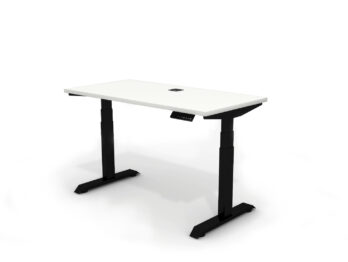
Height-adjustable desk specialist Workplaces offering seated and standing work options Height-adjustable desks, desk frames, controls, and cable-management accessories ANSI/BIFMA X5.5 applies to desk products. EN 527-1 specifies dimensional requirements for office work tables and desks. Check scope and edition before specifying. Confirm the usable adjustment range, electrical compatibility, control configuration, and availability of installation and service support in the destination country. What are the minimum and maximum working heights? What are the stated load limits? Are electrical components compatible with local requirements?
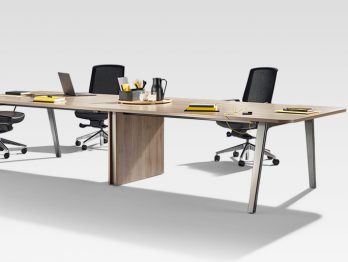
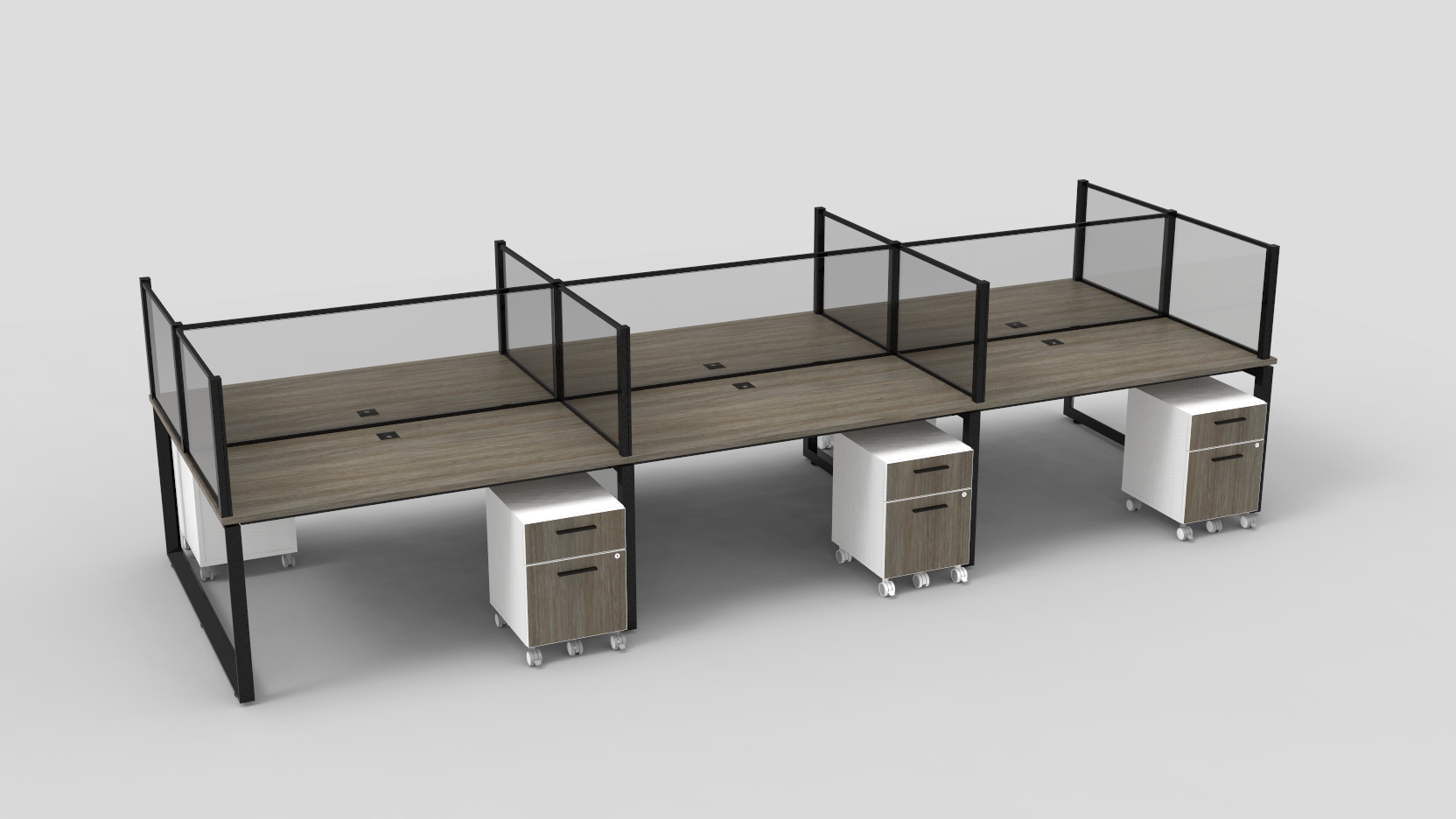
Contract-workstation manufacturer Large offices needing coordinated desks, panels, and shared work areas Workstations, screens, benching systems, meeting tables, and matching accessories EN 527-1 is relevant to office desk dimensions; ANSI/BIFMA X5.5 covers desk products. Ask which tests apply to each product rather than assuming one standard covers the full system. Review space plans, panel and desk dimensions, finish samples, assembly instructions, and the process for ordering matching components later. Can the supplier provide dimensioned layouts and specification sheets? Are finishes and components consistent across production batches?
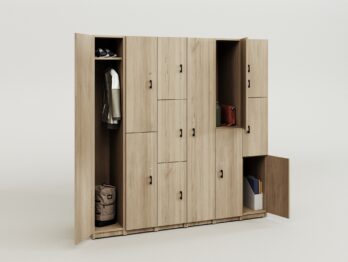
Office storage specialist Teams requiring organized storage for documents, supplies, or personal items Filing cabinets, pedestals, cupboards, shelving, and lockers ANSI/BIFMA X5.9 covers storage units. Verify the product category, test scope, and intended use against the standard and applicable local requirements. Compare storage capacity, drawer or door configuration, delivery access, assembly needs, and any local requirements for anchoring or safe installation. Are the storage unit’s dimensions and capacity documented? Are keys, locks, or replacement hardware available after delivery?
Modular office-furniture supplier Organizations that need flexible layouts or phased office changes Reconfigurable desks, screens, storage modules, and collaborative-area furniture Check the relevant product-specific standards for desks, chairs, and storage; a modular system may contain products covered by different standards. Assess whether modules can be rearranged, extended, or matched with later orders, and whether installation guidance is available for each location. Which components are interchangeable? Are replacement parts and finish details documented? Can the system support phased procurement?
Local dealer or project integrator Buyers needing coordinated sourcing, delivery, installation, or after-sales support in a particular region Furniture from multiple product categories, space planning, delivery coordination, and installation services Request product-level test documentation and confirm that the stated standards apply to the supplied models. The integrator’s role does not itself establish product compliance. Clarify which party is responsible for specifications, import documentation, installation, warranty handling, and service after handover. Who is the contracting seller? What services are included? How are defects, warranty claims, and replacement parts handled locally?

Buyer note: Supplier profiles above describe general sourcing options, not specific companies or brands. Standards are reference points, not a guarantee of certification; verify the current edition, product scope, test evidence, and destination-market requirements for each item.